Home > Medicine > MCAT
I Bombed My First Practice Test — Here’s How I Turned It Around

By Dr. Sarah
Last Updated Apr 2, 2025
🎁 Special MCAT Gift at the Bottom of this Page! 🎁
I still remember staring at the screen, completely numb.My first full-length MCAT diagnostic came back with a score in the 480s.I refreshed the page three times just to make sure it was real. It was.At first, I laughed — the awkward, nervous kind of laugh that hides full-blown panic. Then I spiraled into my negative thoughts.“I’m not smart enough.”“Everyone else is probably scoring in the 510s already.”“Why did I even think I could do this?”If you’re reading this and you’ve just taken your first practice test (and it went terribly)… I need you to hear this:“It does not mean you’re doomed. And no, it does not predict your final score.”I’m now prepping at a much higher level — and gaining confidence I didn’t think was possible.Here are a few things I wish someone had told me after that low first score.
1. Your Diagnostic Isn’t a Prediction — It’s a Starting Line

One of the biggest mindset shifts I had to make: your first score is just a data point, not a death sentence.It doesn’t define your intelligence. It just reflects what you haven’t reviewed yet.When you think about it, most students take the MCAT diagnostic before seriously studying. So of course the score will be low — that’s the point.Instead of asking, “How did I do?”Start asking, “What can I learn from this?”
2. Start Breaking Down Your Mistakes — Not Just Your Score

After my meltdown, I forced myself to go back and review the exam — not just the score sections, but each question.Here’s what I started doing after every test or section:• Flag every question I guessed on• Label wrong answers by why I got them wrong (content gap, misread, timing, etc.)• Track patterns — especially in CARS and Chem/PhysThis helped me stop panicking and start spotting real trends in my thinking. I wasn’t failing randomly. I was just missing patterns that could be fixed.
3. Focus on Fixing Gaps, Not Memorizing Everything

My instinct after the low score was to rewatch every lecture I could find online, take 10 pages of notes, and try to master everything all at once.It backfired. I burned out in a week.What helped me move forward was focusing on targeted review — picking ONE weak area, spending a day or two fixing it, then moving to the next.Instead of trying to cover all of biology, I’d say: “Today, I’m just reviewing enzymes and kinetics.”
That approach helped me build actual confidence, not just cram more content.
4. Build a System — So You’re Not Relying on Motivation

After scoring low, I didn’t trust myself anymore. I felt like I wasn’t “disciplined enough” to improve.But the truth is, I didn’t need more discipline. I just needed a system.Once I had a daily plan — one that told me what to study, when to review, and how to space out practice — I stopped second-guessing every decision.I wasn’t relying on motivation anymore. I was just showing up and following a process.
5.Take Care of Your Mindset as Much as Your Content

No one talks about this enough, but a low diagnostic score can wreck your self-esteem. And if your brain is stuck in “I’m failing” mode, no amount of studying will help.So I started:• Writing down small wins every week• Talking to other students who struggled and improved• Replacing “I’m bad at this” with “I’m learning how to do this”You don’t have to be confident right away. But you do need to believe this:
Your current score is not the ceiling. It’s just the beginning.
Follow These 5 Steps— and You’ll See Results
By following these five proven steps, you can rebuild your confidence, study smarter, and steadily raise your score — no matter where you're starting from.But here’s the challenge:Most students struggle to implement all these steps on their own. It’s not because they’re not capable — it’s because they’re overwhelmed, stuck in self-doubt, and trying to “do more” instead of doing what actually works.If that’s you, take a breath. You don’t need to have it all figured out right now.What you need is a plan. A system that helps you track your progress, correct your blind spots, and rebuild belief in yourself one day at a time.Because here’s the truth: That low score doesn’t define you. But what you do next? That absolutely does.You’ve got this — and this time, you’re not starting from scratch. You’re starting from experience.
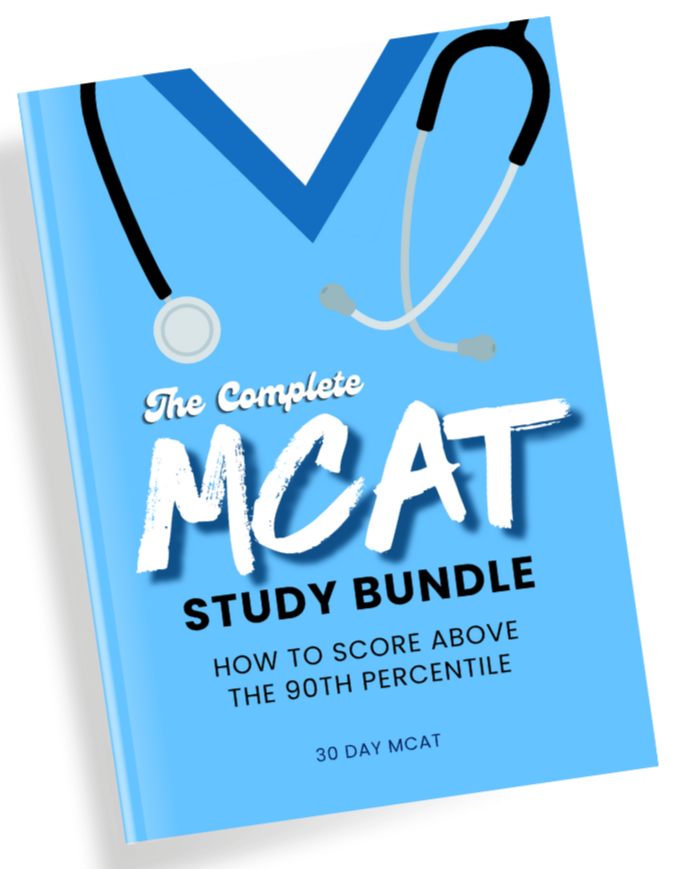
That’s why we created The 30-Day MCAT Study Bundle—to provide students with a step-by-step roadmap that ensures they follow these exact six steps effortlessly.For a limited time, the 30-Day MCAT Study Bundle is available with exclusive bonuses:🔹 A Complete 30-Day Study Plan – Know exactly what to study every day.
🔹 2,000+ Realistic MCAT Questions – Train under real test conditions.
🔹 CARS Mastery Guide – Finally conquer the hardest section.
🔹 Private MCAT Community – Get support from other students.
🔹 $100 Off for Early Students – Special discount for a limited time.
🔹 Risk-Free Guarantee – If you don’t see results, we’ll make it right.
The Complete MCAT Study Bundle
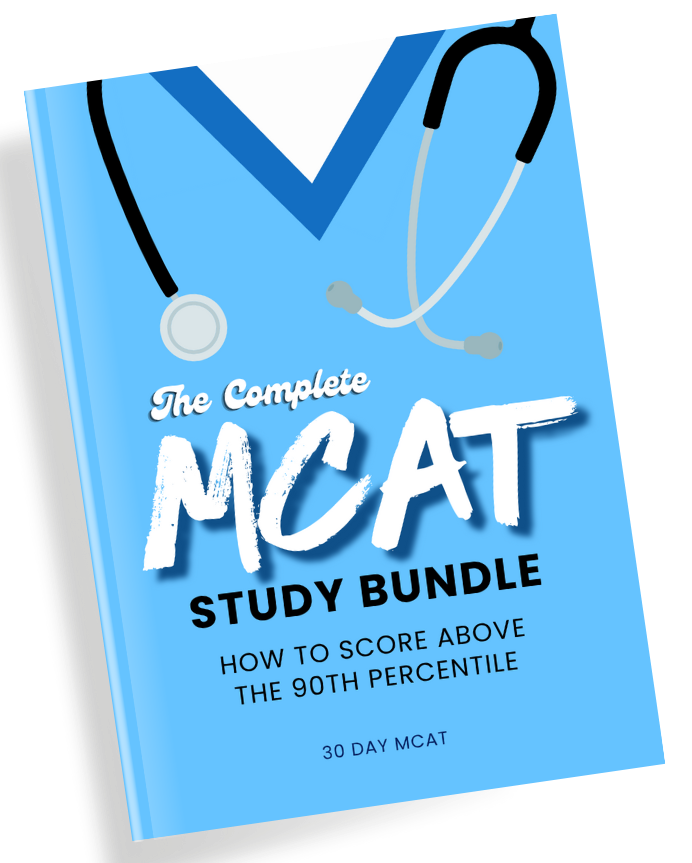
Unlock the Secret on How to score above the 90th Percentile on the MCAT and get into Medical School!
Limited Quantities Available
Student Reviews
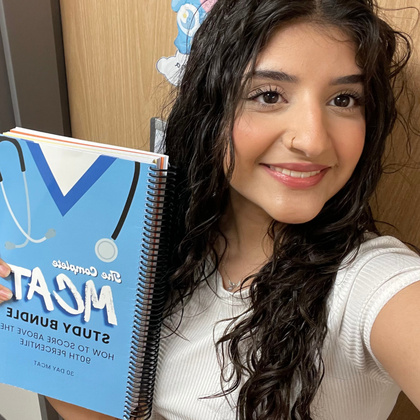
Monica L.
"I didn’t think 30 days was enough time to prep for the MCAT… but this study system PROVED ME WRONG. I went from a 502 to a 515 in one month."
Monica's MCAT Score: 515
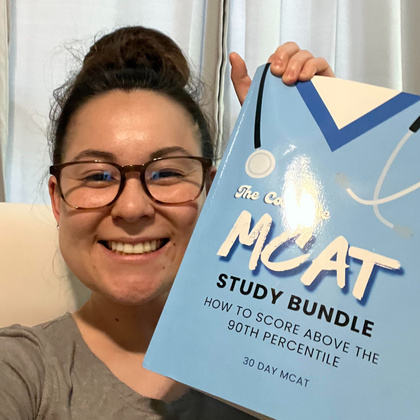
Sierra R.
"This saved me from wasting time on useless material. I got the exact high-yield topics, daily schedule, and study hacks I needed. Scored 521!"
Monica's MCAT Score: 521
Start Your MCAT Prep Today!
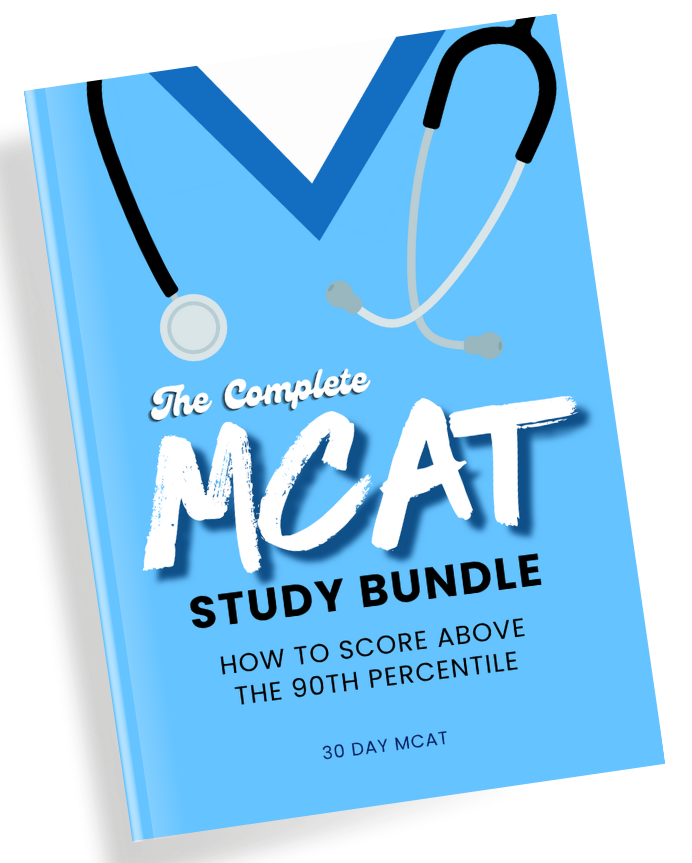
Everything you need for your MCAT preparation in one bundle!
Limited Quantities Available
Special MCAT Gift!
The Complete MCAT Study Bundle is offered in hardcover, paperback, spiral bound and digital version. Click below and order today!
🎁 Use code 'SNEAKPEAK' for $15 OFF! 🎁
© The MCAT World. All rights reserved.